The Fentanyl Crisis Is a Visibility Problem
Key Takeaways:
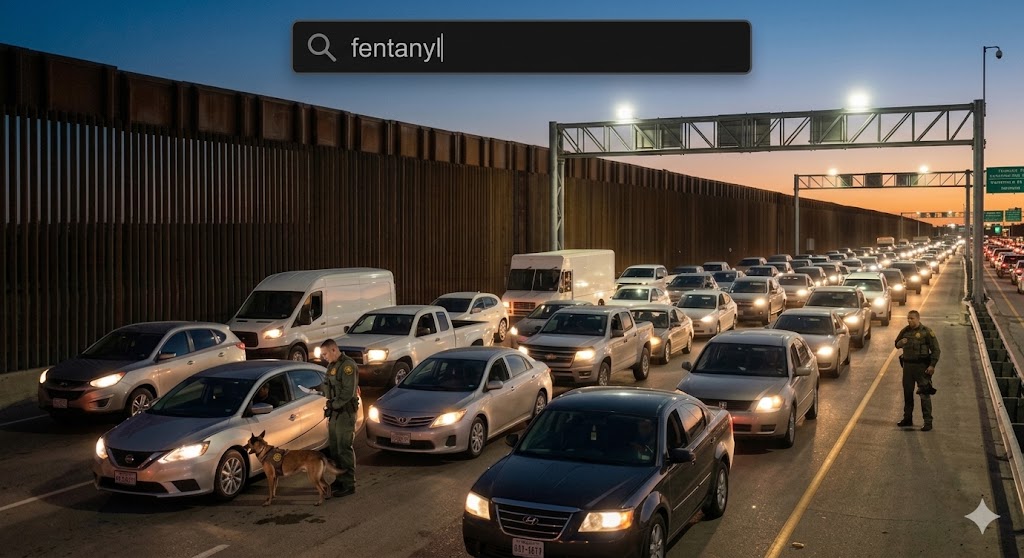
Modern border security does not suffer from a lack of cameras. It suffers from a lack of usable visibility.
Across ports of entry, logistics hubs, and critical infrastructure sites, thousands of cameras capture video 24/7. Yet when a specific intelligence tip arrives, finding the relevant vehicle or event can still take hours or days. In interdiction operations, that delay is often the difference between a seizure and a successful delivery.
The fentanyl crisis has exposed this gap clearly.
Unlike traditional narcotics, fentanyl’s extreme potency allows traffickers to move high-value shipments in very small quantities, often through legal ports of entry using civilian vehicles and commercial trucks. This creates a true “needle in a haystack” problem for border security and law enforcement agencies.
But the challenge is not a lack of surveillance. It is the inability to quickly extract actionable intelligence from massive amounts of video.
Most traditional border surveillance and video analytics systems rely on fixed parameters: license plate recognition, motion detection, and basic object classification such as person or vehicle. These systems work well for predefined threats. They are far less effective when intelligence is descriptive and incomplete.
Investigators do not think in object classes. They think in descriptions and behaviors.
They are looking for:
- A silver sedan with a missing hubcap
- A truck that entered twice in one day
- A person who approached a fence, left, and returned 20 minutes later
- A vehicle that avoided the main inspection lane
- A white van with 'G&J Construction' text on the door
Legacy video surveillance systems cannot search for these scenarios. They can only flag what they were configured to detect in advance.
This is where the next shift in video intelligence is happening: from detection to search.
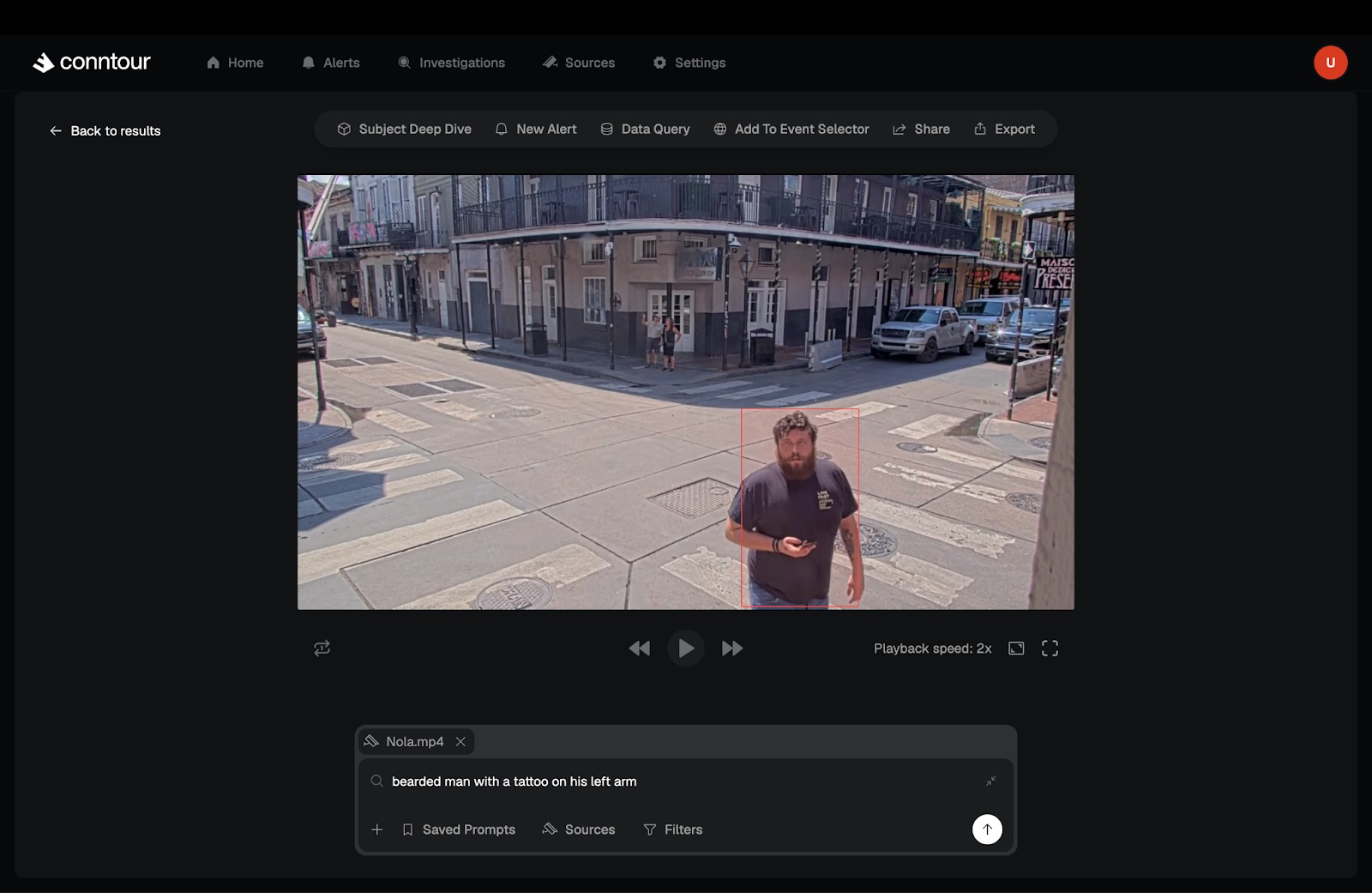
When analysts can search video using natural language descriptions and behavioral scenarios across thousands of cameras, video stops being a passive recording system and becomes an operational intelligence tool. This helps solve what many security teams call the “dead video” problem - footage that is recorded and stored but never used because the manual effort required to review it is too high.
The bottleneck in modern border security is no longer video collection. It is video search.
The fentanyl crisis will not be solved by more cameras alone. Most critical locations are already heavily monitored. The real opportunity is in the intelligence layer that sits on top of existing camera infrastructure - enabling teams to move faster from intelligence to insight, from suspicion to verification, and from investigation to interdiction.
In modern border security and drug interdiction operations, speed of insight is operational advantage.

%20(1).png)

.jpg)
Stay Updated
Get the latest insights on AI surveillance and
security intelligence.