The State of CCTV Analytics in 2026
Key Takeaways:
%20(1).png)
CCTV Cameras & Analytics
CCTV cameras are everywhere in our communities, used by both public and private organizations.
- Border control agencies rely on them to keep 24/7 eyes on areas so large that they can’t always be guarded in person.
- Transportation authorities use cameras to identify suspicious activity and detect potentially dangerous objects left on board.
- Law enforcement uses CCTV to maintain visibility on the streets and collect evidence when a crime occurs.
- And today, almost any business has video surveillance inside and outside its premises.
There are hundreds of millions of security cameras deployed around the world. But having cameras is not the hard part. The hard part is knowing when something important is happening. In this article, we discuss the latest advances in security camera analytics and how your team can leverage these solutions.
What Is Video Surveillance Analytics Software?
Video surveillance analytics systems retrieve valuable information from the massive amount of video data produced by security cameras. Their core reason for existence is that it’s impossible to monitor hundreds or thousands of cameras. This applies to both real-time surveillance (i.e., live video) as well as past footage used for investigations of past events.
Given the complexity of this task, a number of platforms offer solutions that help security teams extract intelligence from the footage captured by their cameras. Many of these platforms still rely on legacy approaches that limit what information can be retrieved. These systems expose a fixed set of parameters (such as t-shirt color, license plate, weapons, and other basic parameters) that can be used as rules for parsing video footage. Despite their usefulness, these rules are far from perfect. Life is complex, and the number of events one may want to query far outnumbers the parameters these platforms offer.
For example, imagine you’re tasked with capturing the head of a criminal organization who you know is moving in a utility van branded “MUNGER PLUMBING,” for which you don’t know the license plate. None of these legacy tools allow you to detect such a complex, multi-attribute vehicle, leaving your team to review potentially hundreds of hours of footage to find him.
In the last two to three years (this article is being written in January 2026), AI models’ performance in computer vision has grown exponentially. As such, AI models can now detect individuals, vehicles, and suspicious behavior, which completely change how we think about video surveillance analytics. We are moving from rigid, rule-based systems that only detect what the analytics vendor defines to AI-based systems where virtually anything can be queried, no matter how complex the search is.
Conntour’s Analytics Platform
Conntour makes it incredibly easy to distill footage from your security cameras. You can simply prompt, in plain English, the exact thing you’re looking for. By allowing searches to be performed using words, Conntour changes the paradigm of how security cameras are parsed. Security teams are no longer constrained by the rules offered by legacy analytics vendors. Instead, anything they can put into words can be retrieved.
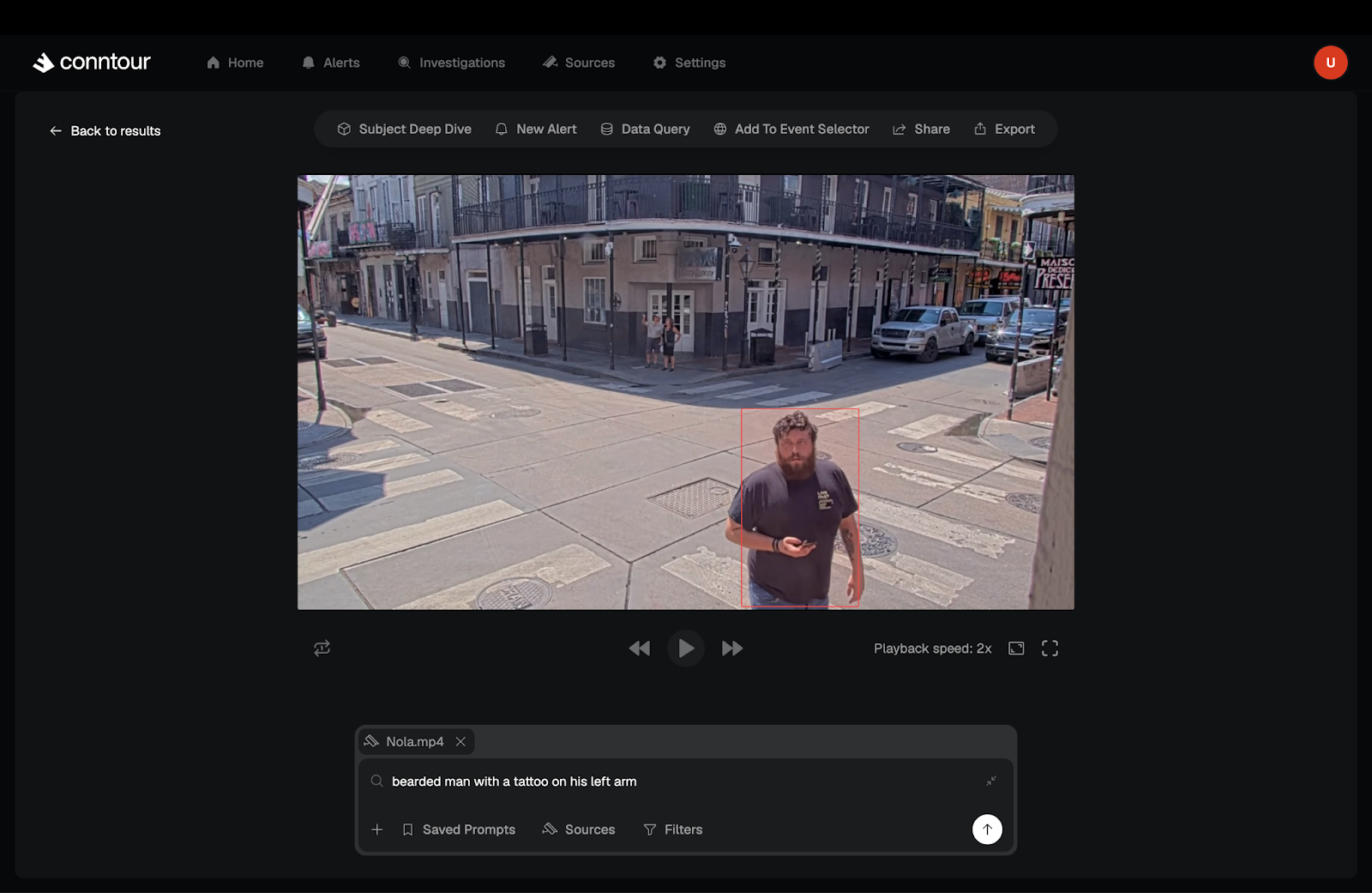
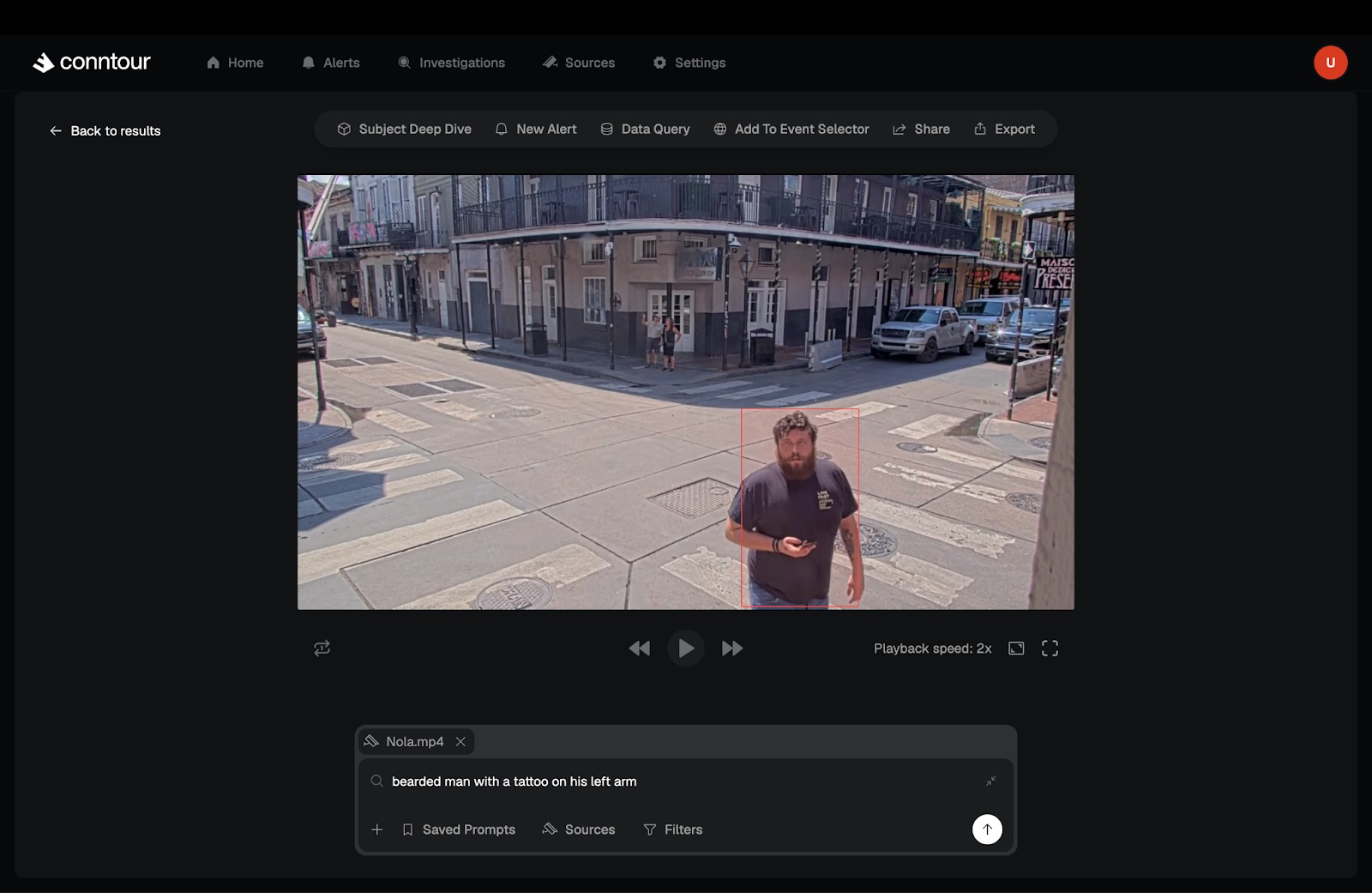
For example, let’s say you’re looking to find a bearded individual who has a tattoo on his left arm. Given the level of detail we’re looking for, no legacy tool will be able to detect him. Furthermore, manually reviewing hundreds or thousands of hours of footage to find this person is extremely time-consuming.
With Conntour, finding him takes seconds. You write a prompt describing the characteristics of the person of interest, such as “bearded man with a tattoo on his left arm,” and the system will go over all your camera feeds and detect him. If one of your cameras captures him in the future, the system can notify you so action can be taken immediately.

.png)


.jpg)
Stay Updated
Get the latest insights on AI surveillance and
security intelligence.